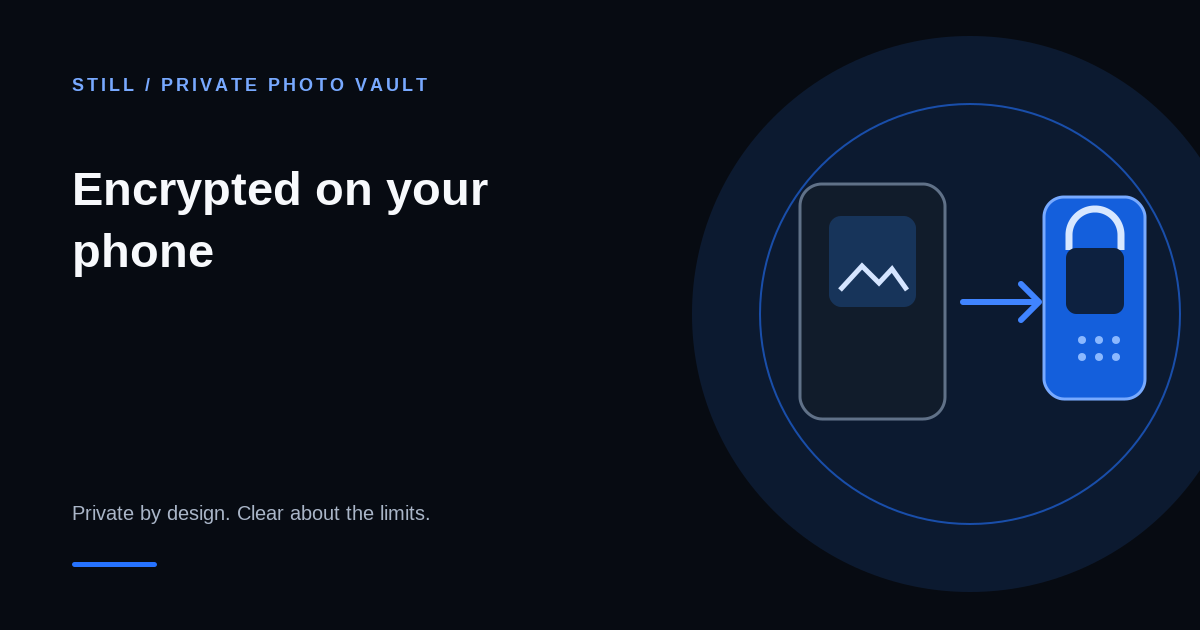
Encryption needs a clear data path
A useful explanation shows when the app encrypts a photo, what is stored locally, what leaves the device and where decryption happens. For a backup, the order matters: encrypting before upload can keep the storage service from receiving readable files, if the key remains outside its control.
Ask what “all data” includes
The photo or video may not be the only sensitive part. Filenames, album names, thumbnails, notes and search indexes can reveal what a library contains. Ask which items are encrypted and whether each uses the same protection boundary.
Keys and recovery are the hard part
Who creates the key? Can support reset access? How does a second device open an encrypted backup? If the provider cannot decrypt data, what recovery secret must the user keep? An honest explanation makes these trade-offs clear instead of using “zero knowledge” as a shortcut.
Encryption has edges
A readable export is readable outside the vault. A compromised device or an already-unlocked session can expose open content. Account, payment and network details may still be processed even if a service cannot read the photos. These are separate parts of the threat model.
Still’s design and evidence status
The Still specification calls for native authenticated encryption of vault content and metadata, with keys kept out of JavaScript and service databases. The native implementation is in development and has not completed independent review. That is a design requirement, not proof of deployed zero-knowledge encryption.
Sources
Questions about this guide
Does zero-knowledge mean the service collects no data?
No. It usually refers to access to protected content or keys. Account, billing, network and operational data can be separate.
Is client-side encryption the same as an audit?
No. It describes where encryption occurs. An audit reviews a scoped implementation and does not automatically cover every platform, recovery path or release.
Does encryption protect photos after export?
Not automatically. A normal exported file can be opened outside the vault unless you separately protect that copy.
The native app is in development. See its current status before planning a move.
Check app availability